Henry Oriabure leads international experts in supporting Edo State’s renewable energy and sustainable development agenda
A consortium of European and United Kingdom grants, blended-finance and renewable-energy experts participated prominently in SHINE Edo 2026, held in London on Friday, 31 July 2026.
The delegation was led by Henry Oriabure, a Governing Council Member of the Hydrocarbon Pollution Remediation Project (HYPREP) under Nigeria’s Federal Ministry of Environment, representing Niger Delta communities and Director-General for YES4APC.
SHINE Edo 2026 brought together hundreds of Edo indigenes, government officials, investors, professionals and development partners. The event was organised by the Edo State Government to strengthen its relationship with the global Edo diaspora and present the administration’s development agenda.

The Edo State delegation was led by the Executive Governor, Senator Monday Okpebholo, and included senior government officials, members of the State Executive Council, legislators and political leaders.
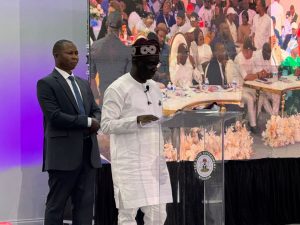
During the event, Governor Okpebholo described the Edo diaspora as one of the state’s greatest assets and encouraged Edo people living abroad to contribute their expertise, investment and international connections towards the state’s development.
The governor emphasised that meaningful development extends beyond road construction to improvements in healthcare, education, security, economic opportunities, infrastructure and the general quality of life of Edo people.
Community Solar Funding Support Proposal
A major highlight of the consortium’s participation was the presentation of a Community Solar Funding Support proposal to Governor Monday Okpebholo.
The proposal supports the governor’s SHINE development agenda and focuses on creating a pipeline of well-structured and fundable renewable-energy projects across Edo State’s 18 Local Government Areas.
Under the proposal, the European and UK consortium would help identify suitable projects, develop them to an investment-ready stage and mobilise funding through:
- International and domestic grants;
- Blended-finance arrangements;
- Development finance;
- Impact investment;
- Private-sector participation; and
- Strategic international partnerships.
The initiative forms part of the wider 774 Community Solar Projects Scheme, which seeks to develop community-based renewable-energy solutions across Nigeria’s 774 Local Government Areas.
Following its proposed implementation in Edo State, the model is intended to support other Niger Delta communities and participating states across Nigeria, subject to project readiness, funding availability and the establishment of appropriate partnerships.
Supporting Sustainable Development
The Community Solar Projects proposal is designed to support projects that align with the United Nations Sustainable Development Goals and address important social, economic and environmental needs within local communities.
The proposed areas of intervention include:
Community Solar Health Hubs
Solar-powered health facilities would help provide more reliable electricity for medical equipment, vaccine refrigeration, maternity services, emergency care and other essential healthcare operations.
Productive Solar Mini-Grids
Productive mini-grids would provide clean and dependable electricity for local businesses, markets, agricultural processing, artisans and small and medium-sized enterprises. This could support employment, entrepreneurship and local economic growth.
Solar Water and Irrigation Systems
Solar-powered water and irrigation projects would improve access to clean water, strengthen agricultural production and help farming communities reduce their dependence on expensive or unreliable fuel-powered systems.
Education and Skills Centres
Renewable-energy systems could support schools, technical training centres, digital learning facilities and community skills-development programmes, particularly in areas with limited access to dependable electricity.
Integrated Planning, Digitisation and Innovation
The proposal also promotes coordinated project planning, digital monitoring, transparent reporting, innovation and the collection of reliable data to improve project delivery and demonstrate measurable community benefits.
Through these interventions, the consortium believes the programme could accelerate clean-energy access, stimulate economic activity, improve essential public services and strengthen environmental sustainability across Edo State.
Engagement with Edo State Officials
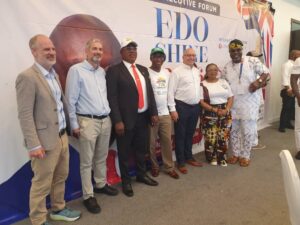
During SHINE Edo 2026, Henry Oriabure led consortium members Richard Murray, Peter Griffiths and Arek Moreczewski in a series of productive engagements with members of the governor’s delegation and other senior dignitaries.
The consortium met and interacted with:
- Dr Loretta Oduware Ogboro-Okor, Director-General of the Edo State Diaspora Agency;
- Barrister Nosa Adams, Edo State Commissioner for Environment and Sustainability;
- Lady Vivian Elabor, Director-General of the Edo State Tourism Agency;
- Mr Goddy Francis Okoyo, Special Adviser to the Governor on Diaspora Affairs; and
- Hon. Osarodion Osagie, Senior Special Assistant on Diaspora Matters.
The discussions provided an opportunity to explore how international funding expertise, diaspora networks and sustainable-energy partnerships could contribute to the state’s development priorities.
The consortium delegation was warmly received by the officials and participated in group photographs with members of the Edo State delegation.
A hard copy of the Community Solar Funding Support proposal was also signed by the Governor’s Special Adviser on Special Duties. This represented a symbolic acknowledgement of the proposal and reflected the administration’s openness to further discussions concerning foreign investment and international development partnerships.
Celebrating Edo’s Culture and Global Diaspora
Members of the consortium commended the impressive attendance at SHINE Edo 2026 and the strong participation of Edo people living in the United Kingdom and other parts of the world.
They were also impressed by the event’s colourful cultural performances, which celebrated the history, heritage, unity and identity of the Edo people.
The programme combined policy discussions, investment engagement, networking and cultural displays, creating a platform through which government representatives and diaspora stakeholders could consider practical opportunities for collaboration.
Building Partnerships for Edo’s Future
 The presentation of the Community Solar Funding Support proposal demonstrated the opportunities that can emerge when government, diaspora professionals, local communities and international partners work together.
By combining Edo State’s development priorities with international grants, blended finance, investment expertise and renewable-energy technology, the proposed programme has the potential to deliver practical and sustainable solutions for communities across the state.
The consortium expressed its readiness to continue discussions with the Edo State Government and relevant stakeholders to assess suitable locations, develop fundable projects and establish the institutional partnerships required for implementation.
SHINE Edo 2026 reinforced the growing importance of diaspora participation, international investment and sustainable development partnerships in Edo State’s long-term development agenda.
For Henry Oriabure and the European and UK consortium, the London engagement represented an important step towards transforming the Community Solar Projects proposal into a structured programme capable of improving public services, supporting businesses, creating opportunities and enhancing the quality of life within communities across Edo State and Nigeria.